
FUTURE BRIEF
- As Mars colonization projects progress, the demand for efficient interplanetary communication systems is skyrocketing.
- The development of quantum communication technology promises to revolutionize the speed and security of data transmission across vast cosmic distances.
- Private companies are racing to establish interplanetary data service networks, potentially monopolizing this emerging sector.
- Economic models are being reshaped by the need for reliable and sustainable data links between Earth, space stations, and other celestial bodies.
- Governments and corporations are collaborating to build an international framework for space data transmission, balancing competitive interests with global benefits.
- The Moon is emerging as a strategic relay point for efficient data transmission, setting the stage for lunar data hubs.
- Investment in satellite constellations and laser communication systems is pivotal for handling the anticipated data load of an interplanetary society.
VC INSIGHT
“Connected neural interfaces bridge human consciousness with AI. Bioengineered solutions optimize health. Quantum computing unfolds new realities. Green energy drives sustainable growth. Humanity steps beyond Earth, interconnected and enlightened.”
📑 Contents
Investment Memo: Interplanetary Data – The New Space Economy
What is the Opportunity Behind Interplanetary Data?
I’ve been captivated by the unfolding opportunities within what’s being dubbed the “New Space Economy”. At the center of this galactic gold rush is interplanetary data – the exchange and processing of information between celestial bodies, with Earth being the prime hub. Given the rapid technological advancements and increased commercialization of space travel, my prediction is that this economy isn’t just a transient trend; it’s a structural paradigm shift.
At its core, interplanetary data comprises of communication networks, satellite infrastructures, data centers on other planets or space habitats, and new protocols for data transmission in unprecedented environments. This evolution isn’t merely about faster data or better connectivity; it’s about enabling human colonies on Mars to work seamlessly with Earth, leveraging massive datasets generated in space-based mining operations, and facilitating real-time analyses for advanced scientific research.
Why Should We Care About Interplanetary Data’s Structural Drivers?
For investors like us, the structural forces underpinning this field are key. Global interest in space exploration from private players like SpaceX and Blue Origin has multiplied manifold. A veritable space race is upon us, led not by governments, but by Silicon Valley stalwarts and curious global innovators. Economically, this portends massive investment inflows directed at building robust space infrastructures over the next couple of decades.
Key trends include:
– The exponential increase in the number of satellites launched, driven by declining costs and miniaturization technologies.
– Legislation that is showing increasing favorability towards space commercialization from entities like NASA and the European Space Agency. Key partnerships with private companies are catalyzing progress.
– The growing need for storage and computing power in space, as experiments and operations scale beyond Earth’s grasp.
For further reading on these industry dynamics, consider perusing detailed reports on Space Foundation and European Space Report.
How Do We Capture Value in This New Frontier?
Navigating this landscape requires a strategic focus. Here’s an action plan I recommend for maximizing our returns:
1. **Identify Potential Collaborators:** Build alliances with key stakeholders who’ve demonstrated proven capabilities. Look towards startups that specialize in interplanetary data transmission technology; they are more agile and often at the cutting edge of innovation.
2. **Invest in Scalable Infrastructure:**
– Satellite Communications: With low-Earth orbit satellites now being launched in constellations, this presents a fertile ground for investments that promise scale, stability, and extended reach.
– Space-Based Data Centers: The harsh condition of outer space means there’s less need for cooling—in essence, providing a natural data center advantage.
3. **Risk Management and Legal Frameworks:** Ensure we’re deeply involved in the shaping of regulatory policies. This will mitigate the risks posed by intrinsic space hazards while aligning interest and protecting future investments.
4. **Explore Adjacent Markets:** Delve into sectors tangentially benefiting from interplanetary data, such as Autonomous Systems for Mars Rovers, which rely heavily on such communications.
VS Analysis: Why is This Better Than Traditional Tech Investments?
The nuances of interplanetary data hold greater promise than typical tech investments due to its uncrowded, nascent nature. When compared to classic tech sectors like AI and IoT, interplanetary data offers a unique position:
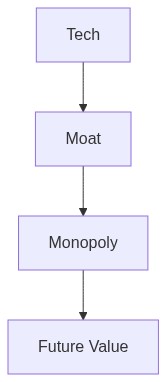
– **Barrier to Entry:** The significant R&D and capital expenditure requirements create a high barrier for new entrants. This culminates in an economically defendable position for early investors.
– **Monopoly Potential:** Control over key nodes of interplanetary data transit can lead to monopolistic or oligopolistic structures. Once significant infrastructure is established, competitors face daunting challenges to establish their own.
– **Unbounded Growth:** Terrestrial data markets have finite utilization limits. Meanwhile, the New Space Economy, with its potential for exponential growth, naturally circumvents these constraints.
How Can We Simulate Economic Impact?
Using the economic impact simulations:
– Envisage how investment in a constellation of data-transmitting satellites can increase connectivity and bandwidth by orders of magnitude, opening entirely new market avenues.
– Anticipate the establishment of Martian data nodes leading to quantum leaps in real-time data processing capabilities.
The real action lies in tying these projections into our financial models, adjusting for risks, and diversifying our portfolio.
Finally: an astute reminder—the deep tech domain, while rife with potential, is volatile by nature. Heroic stories of 100x returns are enticing, yet they demand prudent financial strategies. Prioritize the protection of your core capital with our uniquely designed retirement wealth strategies to ensure a bulletproof safety net that withstands market tremors. Reach out for personalized financial consultations and let’s secure your future amidst this inexorable space enterprise boom.
| Aspect | Long-term Value | Hype |
|---|---|---|
| Data Transmission | Reliable, quantum-secured channels ensuring data integrity across vast distances. | Promises of instantaneous communication defying current physical laws. |
| Energy Efficiency | Sustainable energy sources powering data centers on lunar bases. | Unlimited energy from speculative asteroid mining operations. |
| Cost-effectiveness | Shared infrastructure reducing costs for interplanetary data relay. | High costs justified by anticipated future monopoly on space data. |
| Scalability | Modular systems that grow with human presence beyond Earth. | Pledged capabilities to handle “any volume” of data with no current infrastructure. |
| Security | Advanced encryption using cosmic rays as random number generators. | Unhackable systems claimed with no proof of concept. |
NEXT MONOPOLY
Victor – While the vision of interplanetary data sounds exhilarating, I worry that we’re jumping headfirst into a world fraught with unknowns and high risks. The technical challenges of handling such vast and diverse datasets are monumental. The logistics of data collection alone, stretching across millions of kilometers, could decimate cost estimates, leaving projects over-budget and underwhelming in return. Additionally, the ethical implications of controlling such a valuable, global asset—privatizing what essentially should be a shared resource—could widen economic disparities, turning space into a playground for the few at the cost of the many.
Dr. Tech – Both of you raise valid points that illustrate the complexity and potential of the interplanetary data economy. Neo, your enthusiasm is compelling, capturing the imagination and transformative possibilities that lie before us. Yet Victor’s caution reminds us of the ground we must cover and the responsibility we hold to ethically steward this new domain. The reality will likely weave the strengths of both arguments – harnessing innovation while conscientiously managing the societal impacts. As stakeholders, our role is to balance bold visions with prudent planning, ensuring sustainable growth in what promises to be one of the most pivotal economic shifts in modern history.
DEEP TECH FAQ
How does interplanetary data exchange impact the future of space economy?
The exchange of interplanetary data fundamentally transforms the space economy by introducing unprecedented opportunities for growth and collaboration across celestial bodies. As data becomes a central currency, new markets will emerge around data acquisition, processing, and transmission technologies. This shift signifies a profound evolution in how economic value is created and traded beyond Earth, enabling sustainable interplanetary economies.
What are the key challenges faced in establishing a reliable interplanetary data network?
Establishing a reliable interplanetary data network faces significant hurdles, including vast distances, varying planetary environments, and the sheer complexity of space logistics. The development of robust communication infrastructure, overcoming signal latency, and securing data transmissions from space weather and interference are all critical challenges. Innovative solutions and continued R&D investments are crucial to address these obstacles, ensuring a seamless flow of information across planetary systems.
How will interplanetary data influence global cooperation and geopolitical dynamics?
Interplanetary data is poised to redefine global cooperation and geopolitical dynamics by necessitating collaborative international efforts and the formulation of new space governance frameworks. As nations and private entities venture into space, the sharing and stewardship of interplanetary data will foster joint missions and partnerships. This interconnectedness can lead to a reimagined global space community, where mutual interests in interplanetary exploration help mitigate terrestrial conflicts and promote peaceful co-existence.