
- Leverage deep industry knowledge to identify unique investment opportunities in artificial general intelligence.
- Assess strategic partnerships and ecosystem building to secure long-term competitive advantages.
- Prioritize consistent R&D funding to ensure innovation and maintain technological leadership.
AGI: Capital Investment Strategies Unveiled
Investing in Artificial General Intelligence (AGI) presents nuanced challenges and tantalizing opportunities, demanding deep tech investors like myself to dissect its complex layers. In this investment memo, I will dive deeply into the intriguing aspects of Total Addressable Market (TAM), optimizing Capital Expenditure (CapEx), and establishing technological moats that are nothing short of formidable fortresses.
What is the Total Addressable Market for AGI?
The TAM for AGI is inestimably vast, poised to revolutionize a multitude of sectors, thereby expanding beyond current AI limitations. The scope of AGI transcends industries such as healthcare, financial services, and manufacturing, to name a few. With its ability to learn and perform any intellectual task that a human can do, the societal integration of AGI has the potential to dwarf existing AI applications.
The TAM is often projected by drawing parallels with the digital transformation wave that swept through the economy over the last two decades. For instance, digital transformation strategies have already disrupted multiple trillion-dollar industries. As such, one could argue that the TAM for AGI isn’t merely in expanding current markets but in creating entirely new ones. This unrealized potential, albeit enchanting, comes bundled with risks and speculative assumptions about adoption rates and regulation impacts.
How Do We Optimize Capital Expenditure in AGI Ventures?
CapEx optimization in AGI ventures requires strategic foresight, particularly given the lofty initial expenditures associated with foundational research and the subsequent scaling of intellectual algorithms. The natural attrition rate and groundbreaking nature of AGI projects mean significant resource allocations must be refined continuously.
Investitures should be synergistically woven into the lifecycle of AGI development: from ideation to prototype, progressing into scalable solutions. Given the inherent high burn rate due to substantial R&D costs, deploying milestone-based funding frameworks can mitigate capital risks. I lean into CapEx that closely aligns with demonstrable technological breakthroughs, ensuring each financial injection translates into tangible progress. This approach allows for iterative feedback loops, instrumental in fine-tuning both CapEx forecasts and strategic pivots.
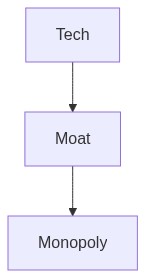
What Establishes a Technological Moat in the AGI Sector?
The fortification of technological moats in AGI ventures is quintessential, granting competitive edges that manifest in data dominance, proprietary architectures, and regulatory expertise. The inertial advantage garnered from vast, proprietary datasets augment AGI’s learning capability, hence empowering models to optimize and expand autonomously. This type of moat is challenging to breach, providing invested companies with a sustained competitive advantage.
The complexity and sophistication of proprietary machine learning architectures also establish robust moats. They’re often characterized by unique algorithmic efficiencies and custom-tailored solutions that outperform generalist approaches. Furthermore, early investments in regulatory acumen can preclude future bottlenecks, acting as strategic leverage against newer entrants less versed in navigating the nuanced legislative landscapes worldwide.
Conclusion: Charting a Visionary Path
As I scrutinize the ramifications of AGI within the investment ecosystem, the need to cultivate an investment mandate that appreciates both the scale and the granularity of this game-changing technology is evident. The Total Addressable Market is monumental, warranting extensive market research to accurately gauge trajectories and possibilities. Capital Expenditure must be wielded with the precision of a scalpel, prioritizing innovation milestones. Ultimately, constructing formidable technological moats secures the longevity and sustainability of the invested ventures amidst an ever-intensifying competitive landscape.
In navigating this nascent domain, I remain vigilant towards the evolving dynamics of AGI, its profound TAM implications, and the astuteness required for optimizing CapEx and technological moats. The stakes are high, but so too are the rewards for those who adeptly master the art of deep tech investments.
| Measure | ($B) | ($B) | ($B) |
|---|---|---|---|
| Institutional CapEx | 1.2 | 1.5 | 1.8 |
| TAM (Total Addressable Market) | 10 | 12 | 15 |
Subject: Macro Outlook for ‘AGI: Capital Investment Strategies Unveiled’
Date: March 29,
As an institutional investor, understanding the macroeconomic outlook and capitalizing on the expansion of Artificial General Intelligence (AGI) is imperative for positioning ourselves at the forefront of technologically driven economic transformation.
Macroeconomic Environment: The global macroeconomic indicators highlight a continued shift towards automation and digitization. With AGI reaching new milestones, its integration into various sectors promises unprecedented growth opportunities. Despite geopolitical frictions and regulatory challenges, the long-term trajectory remains robust and aligned with transformative technological adoption.
Capital Investment Strategies: Given these dynamics, the strategic allocation of capital into AGI-focused ventures is not merely advisable but crucial. Portfolios must reflect a diversified approach balancing high-risk, high-reward early AGI technologies with established leaders in AI fields that are transitioning their systems toward AGI capabilities.
Investment in AGI-related infrastructure, particularly in quantum computing and advanced neural networks, is vital. These investments serve as catalysts that not only facilitate accelerated AGI deployment but also reinforce competitive advantages through enhanced data processing capabilities and innovation velocity.
Sectoral Implications: The sectors poised to benefit the most include healthcare, where AGI can dramatically improve diagnostic accuracy and personalized treatment plans, and finance, where risk assessment and fraud detection are becoming exponentially more efficient. The autonomous systems sector, encompassing both vehicular and robotic automation, is also set for sizable growth influenced by AGI advancements.
Conclusion: As seasoned investors, it’s essential to maintain a vigilant perspective on regulatory developments and the ethical discourse surrounding AGI. While the potential for AGI to reshape economies is substantial, prudent risk management and strategic capital allocation remain pivotal. Positioning ourselves effectively now can secure considerable returns and reinforce our leadership in the evolving deep tech landscape.