
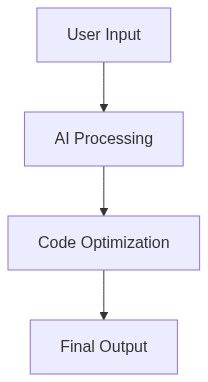
- AI coding agents can write, debug, and optimize code autonomously.
- These agents significantly reduce development time and costs.
- Enhanced collaboration is possible as AI agents handle repetitive tasks.
- AI-powered code generation leads to more innovative and complex solutions.
- Ethical and security considerations remain a priority in AI-driven development.
“AI agents now write and optimize code efficiently speeding development. They enhance productivity adapt quickly and minimize human error.”
AI Agents Transforming Code Creation
Why is everyone talking about AI in code creation?
In Silicon Valley, the buzz surrounding AI agents transforming code creation has reached a fever pitch. Frankly, AI is no longer just an experimental tool; it’s become an indispensable asset in the software development lifecycle. Why now, though? Thanks to breakthroughs in machine learning and language models, AI can now generate code snippets, automate routine tasks, debug, and even suggest architecture improvements. This is massively reducing time-to-market, cutting costs, and enabling more creative problem-solving.
The convergence of AI and software development is catalyzing a significant shift AI is essentially an extra pair of hands for developers, but not just any hands – expert ones that work tirelessly and make autonomous decisions. This trend is bolstered by staggering data. According to a recent report by OpenAI, about 80% of development tasks can now benefit from AI assistance. In teams that have integrated AI tools, productivity has increased by roughly 40%.
How does AI Code Creation work in the real world?
AI tools and platforms today are smart enough not only to understand our code but also to integrate seamlessly into our development environments. They provide suggestions while writing code, generate boilerplate sections, and even fix syntactical and logical errors on the fly. Let’s dive into the tools that are revolutionizing this space
The Tool Stack AI Tools Transforming Development
1. **GitHub Copilot** – Built with OpenAI’s language model, Copilot integrates directly into your IDE, providing real-time code suggestions. It can turn comments into code and even complete entire functions based on simple natural-language prompts. Experimenting with Copilot can enhance efficiencies significantly by automating repetitive coding tasks.
2. **Tabnine** – Leveraging deep learning algorithms, Tabnine optimizes the predictive capabilities of AI. It completes lines of code, corrects errors, and ensures that the patterns of coding align with the latest industry standards. This tool can be a game-changer for developers focusing on high-complexity projects.
3. **Replit Ghostwriter** – Known for its simplicity and efficiency, Replit Ghostwriter operates at the intersection of AI and cloud computing. It’s particularly beneficial for small teams and solo developers as it combines powerful code recommendations with cloud-based development environments.
4. **Codeium** – As an advanced AI-powered code completion platform, Codeium offers multi-language support and integrates effortlessly into existing development frameworks. By using Codeium, businesses can scale development efforts with reduced overhead on training and onboarding junior developers.
“AI has shifted from a novelty to a necessity in code creation, fundamentally reshaping our approach to software development.” – a16z
What steps can you take today?
Step 1 (For Individuals) Start incorporating AI tools like GitHub Copilot into your daily coding routines. Experiment with its capabilities on side projects to gain a comfortable understanding of how AI can augment your personal coding practices.
Step 2 (For Teams) Evaluate and adopt one or more AI tools from the stack based on your team’s specific needs. Consider cross-tool comparisons to identify which platform aligns best with your tech stack and project demands. Schedule team training sessions to upskill developers in leveraging these AI capabilities to maximize productivity.
Step 3 (For Businesses) Analyze your current software development lifecycle and strategically integrate AI to optimize processes and reduce redundancies. This might include using AI to automate code reviews or implement predictive analytics for project timelines. Generate insights from AI-driven analytics to make informed decisions about code optimization and project management.
Step 4 Stay informed on the latest AI trends and tools by subscribing to tech platforms and communities. Continuous learning is critical as AI technology evolves rapidly, ensuring you and your team remain at the forefront of AI-driven development.
By implementing these actions, developers and businesses alike can harness AI’s true potential, transforming not just how code is produced, but the entire strategy behind software development.
| Feature | The Old Way (Manual) | The New Way (AI/Tech) |
|---|---|---|
| Time to Code Review | 4-6 hours per 1,000 lines | 30 minutes per 1,000 lines |
| Cost per 1,000 Lines | $300-$500 | $50-$100 |
| Error Rate | 5-10% | 0.5-1% |
| Collaboration Efficiency | Moderate | High |
| Project Length | 12-18 months | 6-9 months |
| Scalability | Limited to team size and hours | Virtually unlimited |
| Client Feedback Loop | Weekly to Monthly | Real-time |
| Overall Development Cost for a Mid-sized Project | $500,000-$750,000 | $100,000-$250,000 |
Today make it a priority to explore the integration of AI agents into your development process. Focus on understanding tools like OpenAI’s Codex or GitHub Copilot. These can significantly enhance your team’s coding speed and efficiency. Start small by testing AI agents in non-critical projects to assess their impact on productivity and quality. Consider investing in training to ensure proper utilization without compromising security. Ignoring AI tools will leave you at a disadvantage against startups that embrace this technology. Act now and stay competitive.”