TECH INSIDER REPORT⚡
TECH INSIDER BRIEF
As open-source LLMs gain traction, businesses are shifting away from costly proprietary AI models, driven by the balance of cost, flexibility, and community support.
- Open-source LLMs offer cost-effective solutions for enterprises.
- Proprietary AI models include licensing fees and support costs.
- Open-source communities accelerate innovation and customization.
- Enterprises seek scalability and adaptability in AI adoption.
- Concerns over vendor lock-in drive preference for open-source.
EDITOR’S NOTE
“We overestimate AI in the short term, but massively underestimate its compounding velocity.”
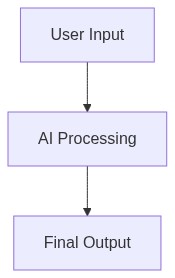
PRACTICAL WORKFLOW MAPPING
Practical Comparison Matrix
| Aspect | The Old Way (Manual) | The New Way (AI/Tech) |
|---|---|---|
| Efficiency | Low – Processes are time-consuming and prone to human error. | High – Processes are automated and streamlined. |
| Time Savings | Minimal – Significant manual effort required. | Significant – Drastic reduction in time per task. |
| Cost Metrics | Higher costs due to increased labor and longer project timelines. | Lower costs due to reduced labor and faster project completion. |
| Scalability | Limited by human capacity and resource availability. | Highly scalable, with ease of processing large data volumes. |
| Adaptability | Slow response to changing conditions due to rigid processes. | Quick adaptation to changes through machine learning and AI. |
| Accuracy | Moderate – Dependent on human accuracy and consistency. | High – Improved accuracy through AI and error detection algorithms. |
📂 INDUSTRY PERSPECTIVES
🚀 The Tech Founder
In the fast-paced world of technology, speed and profitability are king. Proprietary AI models, while initially appealing due to their bespoke nature, often fall behind in delivering swift ROI. These customized systems require extensive development time and significant resources, slowing down the agility that startups and tech giants alike need to maintain a competitive edge. Off-the-shelf AI solutions, often driven by open-source communities, provide a faster go-to-market strategy, allowing companies to leverage cutting-edge innovations without the heavy lifting. Speed translates to profit. By adopting non-proprietary AI models, companies can focus on implementing and scaling products rapidly, maximizing revenue potential and shareholder value.
💻 The Senior Engineer
The allure of proprietary AI models diminishes quickly when confronted with their technical limitations and the stark realities of development. Building models from scratch means grappling with tremendous complexity, requiring exhaustive data collection, processing power, and specialized expertise. The pace of AI research is relentless, and proprietary models risk becoming obsolete as open-source communities continuously enhance models with collective contributions. Relying solely on in-house resources stifles innovation and adaptability. Moreover, maintaining such models is costly and inefficient, often burdened by legacy issues. By leveraging non-proprietary solutions, engineers tap into a collaborative ecosystem, accessing robust, evolving models that can be tailored to specific needs without reinventing the wheel.
💰 The VC Investor
The market’s initial hype around proprietary AI models has given way to a more sobering reality check. Early enthusiasm promised untapped market potential, yet the high costs and slower turnaround times have tempered expectations. Investors are increasingly wary of companies sinking resources into developing proprietary models when the return is neither immediate nor guaranteed. The AI space is defined by swift evolution; open-source models benefit from rapid iteration and community-driven improvements, capturing wider market share faster. VCs now lean towards investments in companies adopting flexible AI strategies that ensure scalability and adaptability. Market size is undeniably vast, but capitalizing on it hinges on pragmatic decisions that align with the trajectory of AI innovation rather than getting trapped in R&D quagmires.
⚖️ THE FINAL VERDICT
“Consider adopting off-the-shelf AI solutions for faster market entry and leveraging open-source tools for cost-effective, agile development.”
PRACTICAL FAQ
Question
Why are companies moving away from proprietary AI models in favor of open-source alternatives?
Answer
Companies are favoring open-source AI models because they offer greater flexibility, transparency, and a collaborative development environment that can accelerate innovation and customization, as opposed to proprietary models which may be more restrictive, costly, and less adaptable to specific business needs.
Question
What are the cost implications for companies switching from proprietary to open-source AI models?
Answer
Switching to open-source AI models can significantly reduce licensing costs associated with proprietary software. Additionally, the open-source community often provides updates and improvements at a lower cost, allowing companies to allocate resources to other strategic areas of their business.
Question
How does the use of open-source AI models impact data privacy and security for companies?
Answer
Open-source AI models require companies to implement thorough data privacy and security measures since the open nature of these models can pose potential risks. However, the transparent and collaborative nature of open-source software encourages robust security practices and community-driven improvements, often resulting in more secure solutions compared to proprietary systems where the underlying code is not publicly scrutinizable.
Disclaimer: Content is for informational and educational purposes. Always test tools before enterprise deployment.