
FUTURE BRIEF
- SpaceX’s Starship paves way for large-scale manufacturing in orbit, reducing costs and increasing accessibility for startups and established companies alike.
- Advancements in material sciences and robotics driven by SpaceX enable intricate structures that are impossible to build on Earth, including massive photovoltaic arrays and cutting-edge satellites.
- The development fosters a new space economy, creating a market for orbital infrastructure that supports construction, maintenance, and expansion of extraterrestrial operations.
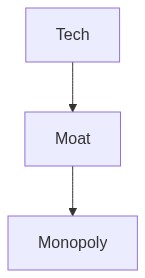
- Structural monopolies are likely to emerge as key players secure intellectual property around proprietary aerospace assembly technologies.
- SpaceX’s success reshapes global supply chains, as parts manufactured in space have distinct advantages such as lower launch costs, reduced material waste, and enhanced functionality.
- Collaboration between private companies and governmental space agencies intensifies, as regulations adapt to embrace the new orbital industrial landscape.
- Challenges remain with regulatory frameworks, space debris management, and the need for sustainable practices to ensure long-term industry growth.
VC INSIGHT
“Awake in a world reshaped by innovation. Flying electric taxis glide overhead. AI companions share insights. Cities pulse with clean energy. Humanity thrives, embracing boundless possibilities. Profoundly grateful to witness this transformation.”
📑 Contents
SpaceX Starship Ignites the Dawn of Orbital Manufacturing
The arena of space exploration and utilization is on the cusp of a massive structural shift, driven by SpaceX’s Starship capabilities. It’s poised to unlock the realm of orbital manufacturing, radically transforming industries. As a deep tech venture capitalist, I find myself exhilarated by the immense potential and long-term implications of this celestial progress.
What Makes Orbital Manufacturing a Game Changer?
At the fundamental level, orbital manufacturing capitalizes on the unique conditions of microgravity, offering substantial advantages. Products developed in space can achieve previously unattainable levels of precision, quality, and innovation. This freedom from terrestrial constraints allows for the precise assembly of materials at the molecular level, fostering breakthroughs in semiconductors, pharmaceuticals, and even novel alloys.
Why SpaceX Starship is the Key Enabler?
The advent of SpaceX’s Starship diminishes the cost barrier significantly. With its reusability and massive payload capabilities, it makes large-scale transport to and from low Earth orbit economically viable. This accessibility is unrivaled, encouraging industries to consider the feasibility of moving manufacturing processes to orbit.
Moreover, Starship acts as a catalyst for unlocking space-based infrastructure development. By facilitating the deployment of essential orbital platforms, the foundation for a thriving manufacturing ecosystem is laid, further democratizing access to space manufacturing.
How Will Global Industry Demand Drive Expansion?
As we navigate this decade and beyond, increasing demands in sectors like healthcare, telecommunications, and defense will drive the exploration of manufacturing opportunities in space. The need for advanced materials and novel solutions will push industries to adopt space-based processes.
Beyond direct manufacturing benefits, industries will seek competitive parity, propelling more players into the domain. When the first movers showcase revolutionary results, the bandwagon effect will prompt an avalanche of interest and investment.
What Are The Macro Trends Fueling This Transition?
Three pivotal macro trends will turbocharge the growth of orbital manufacturing:
- Technology Advancement: The continuous progress in automation, robotics, and artificial intelligence enhances the feasibility of operating complex manufacturing systems in space, reducing human intervention.
- Sustainability Imperatives: With Earth-facing industrial operations facing heightened scrutiny over environmental impact, companies will be incentivized to look skywards for eco-friendlier alternatives.
- Geopolitical Shifts: Space will be the stage for soft power plays, with governments supporting corporate ventures to assert economic dominance and technological leadership in orbital domains.
Long-Term Outlook: 2030 and Beyond
The latent potential is staggering: as reliance on space manufactured products grows, demand will structurally skyrocket. I foresee a symbiotic relationship between terrestrial and orbital manufacturing economies, each buoying and furthering the other. This decade is just the beginning; from 2030 onwards, orbital manufacturing will not only complement but potentially dominate certain verticals of high-precision production.
This vision depends not just on technological capability but also on the adaptability of regulatory frameworks, international space treaties, and public-private partnerships to support a robust orbital economic ecosystem.
Deep tech is highly volatile. While we hunt for 100x returns, you must protect your core capital. Build a bulletproof safety net with our retirement wealth strategies…
| Long-term Value | Hype | |
|---|---|---|
| Technological Advancement | Starship’s capacity to deploy large-scale space factories, advancing in-space manufacturing. | Public excitement about pioneering an era of futuristic tech. |
| Economic Impact | Potential to lower costs and increase production efficiency for various industries. | Speculations about limitless opportunities and space mining prospects. |
| Sustainability | Supports the creation of sustainable life-support systems and closed-loop innovations. | Buzz around potentially colonizing planets based on existing tech. |
| Market Growth | Opening new markets for materials uniquely produced in microgravity. | Media focus on revolutionary breakthroughs and the ‘next big thing.’ |
| Risk Profile | Considered in strategic investment with a focus on risk mitigation for sustained returns. | Momentum driven by speculative investments aiming for quick returns. |
Victor – While the idea of orbital manufacturing is enticing, we must not forget the enormous challenges and risks involved. The cost of transporting materials, the technological hurdles of building in a harsh space environment, and the potential for catastrophic failures cannot be dismissed. There’s a fine line between visionary thinking and overly ambitious projects that may drain resources better spent on sustainable Earth-based solutions. Let’s not get carried away with science fiction fantasies and focus on creating value where it is most desperately needed – right here on our planet.
Dr. Tech – Neo and Victor both present strong cases, highlighting the dichotomy between aspirational advancement and grounded pragmatism. As a venture capitalist, it’s crucial to balance extraordinary long-term potential with feasible short-term achievements. We need to be cautious yet visionary, ensuring investment in orbital manufacturing doesn’t overtake essential innovations on Earth but complements and enhances them. Our focus must remain on fostering projects that address core human challenges while keeping an eye on the horizon of possibility this new frontier opens up. The question remains – can SpaceX’s vision create a viable ecosystem that sustains itself financially and socially while nurturing unforeseen innovations?
DEEP TECH FAQ
How will SpaceX Starship support continuous orbital manufacturing operations?
SpaceX Starship’s design includes significant payload capacity and reusability, enabling frequent launches and returns, which are crucial for establishing sustained manufacturing operations in orbit. This capability ensures that raw materials and finished products can be efficiently transported, while also supporting the regular rotation of personnel and equipment maintenance necessary for continuous operations.
What are the challenges and solutions for maintaining large-scale infrastructure in the space environment?
The harsh space environment challenges infrastructure with issues like radiation, micrometeorites, and thermal fluctuations. To address these, materials and structures must be designed for durability and resilience, potentially utilizing in-situ resource utilization (ISRU) for repairs or expansions. SpaceX Starship could play a vital role in delivering construction materials and advanced robotics to assist with assembly and maintenance tasks in orbit.
How can Starship contribute to reducing costs associated with orbital manufacturing?
Starship’s reusability and heavy-lift capability can significantly reduce launch costs per kilogram, making orbital manufacturing more economically viable. By enabling frequent missions, Starship can lower the cost of transporting materials and products to and from orbit, enhance supply chain efficiency, and support economies of scale in space manufacturing. This, in turn, could lead to widespread adoption of orbital manufacturing processes, driving down overall costs.
1 thought on “SpaceX Starship Ignites Orbital Manufacturing”