
FUTURE BRIEF
- By 2035, SpaceX’s Starlink is set to create a monopoly in the global internet service market, leveraging its vast satellite network for unparalleled connectivity.
- Starlink’s infrastructure provides the backbone for the ‘Internet of Space,’ revolutionizing both terrestrial and extraterrestrial internet services with an expanding fleet of low-Earth orbit satellites.
- SpaceX is not just eyeing internet connectivity but is strategically positioning Starlink as a platform for future data services, including cloud computing, IoT, and interplanetary communication.
- Starlink’s influence will likely transform global economies by providing internet access to underserved regions and enabling new business ecosystems, particularly in emerging markets.
- Regulatory challenges loom as governments worldwide grapple with concerns over space debris, spectrum allocation, and local telecommunication market disruptions.
- With SpaceX’s backing, Starlink is also focusing on cybersecurity measures to safeguard its network against an increasing number of cyber threats, ensuring robust and reliable service continuity.
- The role of AI and machine learning is pivotal in Starlink’s optimization strategy, enabling efficient satellite deployment, predictive maintenance, and real-time service adjustments.
VC INSIGHT
“Exploring quantum AI, unlocking neural symbiosis between human and machine. Beyond Silicon Valley, seeking unprecedented dimensional leaps. Bridging humanity’s cognitive evolution, while ensuring ethical guardianship. The future intertwines with today—limitless possibilities await.”
📑 Contents
Starlink: The Monopoly in the Internet of Space
The Bold Frontier
In an era where boundaries disappear through intangible networks, Starlink’s robust satellite constellation dominates the sky with a subtle yet resolute presence. Imagine a sky peppered with thousands of tiny satellites forging a web of connectivity—a tapestry of technological kinship that promises a world no longer defined by geographical remoteness. The allure of this proposition—that every man, woman, and child on this planet can eventually leap from the void of communication—is profound. As an investor, we stand on the cusp of this transformative wave.
What Drives Starlink’s Ascendancy?
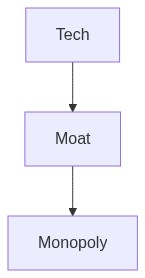
Starlink’s success is anchored on two fundamental structural advantages:
- First-Mover Advantage: By launching an extensive network of low-Earth orbit satellites, the sheer scale of Starlink’s operations outpaces its competitors. With aggressive deployment, they cover the globe faster than any traditional infrastructure can feasibly compete with.
- Network Effect: Each new user, each upgraded satellite enhances the whole. As the network grows, it becomes exponentially more valuable, forming a barrier to entry for potential new players.
Capitalizing on these initial giants’ steps, let’s project forward—beyond just the physical infrastructure—and explore the true macroeconomic promise laid bare by this burgeoning monopoly.
How Does Starlink Impact Global Markets Economically?
The systemic ripple effect Starlink instigates is profound. Consider, for instance, GSM or broadband when they first saturated local markets. Starlink’s potential and the macroeconomic implications are on a much grander scale:
- Global Internet Access: Seamless connectivity could generate significant economic growth and democratize digital dynamics in underrepresented markets.
- Critical Infrastructure: Unfettered data streams become the backbone of futuristic innovations like the Internet of Things (IoT), autonomous vehicles, AI, and cloud computing.
- Disintermediation: Telecommunications incumbents scrambling to adjust, refashioning everything from business models to data pricing to remain relevant.
An insightful article by The Economist discusses this shift and highlights the transformative nature of satellite networks on global economies.
How Can Investors Circumvent Barriers and Capitalize on Future Trends?
So how do we invest wisely to navigate and exploit this landscape? Let’s break down actionable strategies:
- Diversification: As in any venture, risk should be distributed across a broad spectrum—consider funds dedicated to deep tech or related services.
- Talent Pool Investment: Education companies offering nanodegree programs in aerospace engineering, satellite communication and related fields are part of the growth equation. The long-term dependency on skilled labor cannot be overstated.
For a more measured investment framework, the insights offered by McKinsey detail the intertwined dynamics of space technologies and economic activity, providing a navigational compass for investors.
What are the Regulatory Considerations?
Starlink’s growing sector does more than ripple through technological corridors; it drums on governmental doors across the globe. The regulatory landscape veers from one jurisdiction to another. Success depends on proactive engagement:
- Learning the Local Linguistics: Familiarize with local regulations, continue dialogues with governmental entities, and engage legal expertise to navigate compliance efficiently.
- Sustainable Advocacy: Encourage transparency, ethical frameworks and actively contribute to policy-making, fostering an environment where technology transcends borders amicably.
This regulatory navigational blueprint remains paramount, especially as sovereign entities vie for their share of the digital canvas.
Conclusion: As The Galactic Curtain Rises
The road ahead is paved with both daunting challenges and expansive opportunities alike. Starlink’s current and future dominance offers a stage wherein communication is liberated from terrestrial bondage. With strategic foresight, investments can be elegantly poised to capture the immense possibilities woven by millions of airborne bits and bytes.
Understandably, deep tech is highly volatile. While we hunt for 100x returns, you must protect your core capital. Build a bulletproof safety net with our retirement wealth strategies, ensuring a prosperous financial horizon even as we reach for the stars.
| Aspect | Long-term Value | Hype |
|---|---|---|
| Connectivity Coverage | Global reach, bridging digital divides | Spectacular claims of instant global access |
| Technological Infrastructure | Advanced satellite network, ongoing innovation | Buzzwords like ‘Space X’ and ‘Satellite Swarm’ |
| User Accessibility | Greater access for remote areas, reducing costs over time | Captivating images of futuristic user terminals |
| Market Dominance | Potential to set industry standards and influence communication policies | Claims of ‘unbeatable’ market leadership |
| Environmental Impact | Commitment to debris management and sustainability | Promises of ‘zero impact’ operations |
| Economic Influence | Creation of new tech jobs, stimulating local economies | Vague projections of multi-billion-dollar revenues |
| Future Prospects | Sustainable growth, contributing to a connected world | Dazzling visions of a space-dominated future |
NEXT MONOPOLY
Victor – While the vision of a universally connected world sounds utopian, we cannot overlook the implications of Starlink’s growing dominance. Allowing one company to control such a critical aspect of our digital infrastructure poses significant risks in terms of privacy, pricing power, and regulatory compliance. If anything, history remains a staunch reminder of how monopolies stifle innovation and limit choices for consumers. Before we let Starlink dominate the skies, we must critically assess how its control will impact the very societal structures Neo seems optimistic about, potentially leading to new forms of inequality and dependence.
Dr. Tech – The debate surrounding Starlink’s potential monopoly forces us to examine the balance between innovation and regulation in deep tech. The chance for a more inclusive internet is compelling, yet we must not rush into a future where one entity wields disproportionate influence over global connectivity. As venture capitalists, it’s crucial to encourage diverse technological ecosystems that foster competition and creativity. Ensuring a dynamic marketplace that promotes both infrastructure development and fair access is ultimately in humanity’s best interest, and it’s that larger picture we must strive to protect as the tech landscape continues to evolve.
DEEP TECH FAQ
What are the implications of Starlink establishing a near-monopoly in satellite internet services?
The potential monopoly of Starlink could lead to a number of structural challenges. While it might enable unprecedented global internet access, there are concerns about reduced competition. This could result in less motivation for Starlink to optimize speed, pricing, and service quality over the long run. Monopolies tend to stymie innovation, and with fewer competitors, there’s a risk that the pace of advancement in satellite internet technology might slow down, affecting consumers worldwide.
Could regulatory measures be implemented to prevent Starlink from abusing its market position?
Yes, regulatory bodies could take steps to balance the competitive landscape. Policymakers might enforce measures that ensure fair competition, such as setting price controls, encouraging new market entrants through subsidies, or mandating that Starlink share its technology with other players. However, the cross-border nature of satellite internet creates a complex regulatory environment, where international cooperation would be essential to addressing a potential monopoly effectively.
What is the long-term impact on innovation in the space and telecommunications industries if Starlink retains a dominant position?
If Starlink maintains its dominance, innovation within space and telecommunications sectors could take a hit unless strategic collaborations and partnerships are encouraged. With its vast resources, Starlink could dictate market trends, potentially sidelining smaller innovators. But, through synergistic partnerships with tech startups and research institutions, there remains hope for continuous innovation. The focus should be on fostering an ecosystem where new ideas can flourish alongside established giants like Starlink.